
Prof (Dr) Ramakant Dwivedi awarded Al-Farabi Medal by Al-Farabi Kazakh National University in Almaty city of Kazakhstan, June 11, 2026
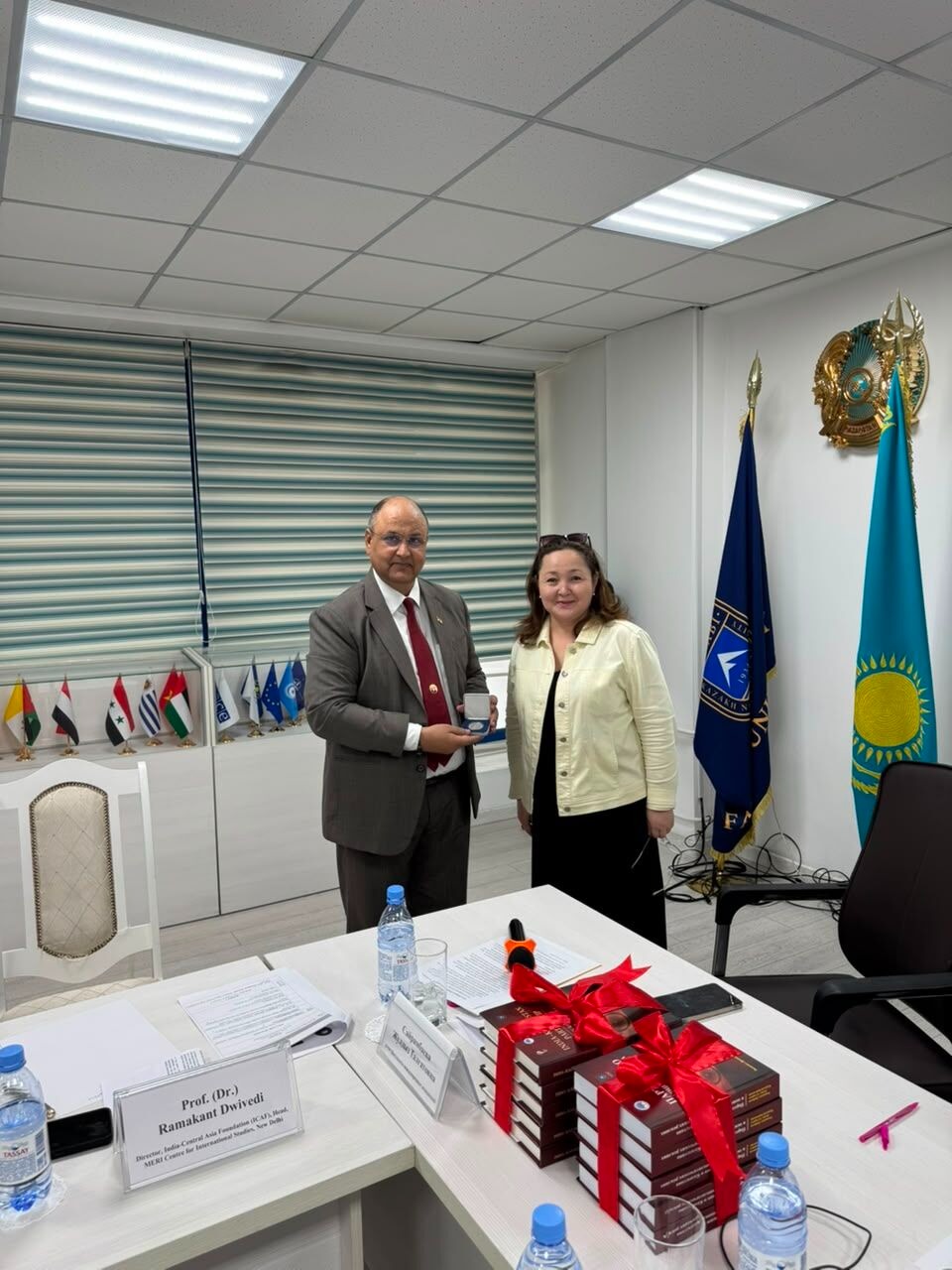
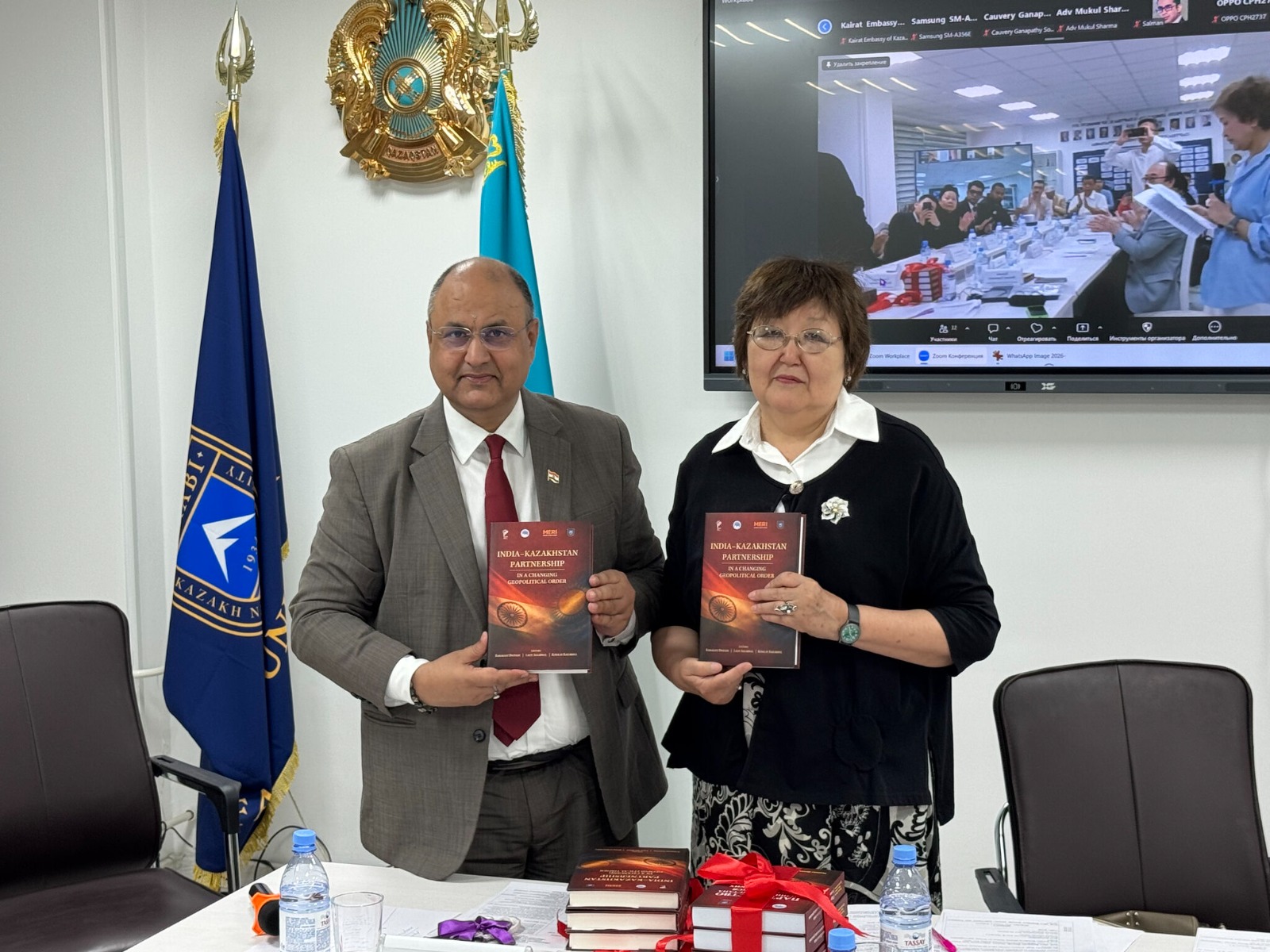
From left: Prof (Dr) Ramakant Dwivedi, Prof K Baizakova and Prof Zhuldyz Sairambayeva
Almaty, Kazakhstan, June 11, 2026 – A Round Table and Book Release were held at the Faculty of International Relations of the Al-Farabi Kazakh National University in Almaty, Kazakhstan on June 11, 2026. “India-Kazakhstan Partnership in a Changing Geopolitical Order” was released. Diplomats, scientists and experts of the two countries discussed how the changing international environment affects the Kazakh-Indian cooperation and what areas can become the basis for its further development. The event was organized by the Faculty of International Relations and the Institute of Security Problems and Cooperation of Al-Farabi Kazakh National University. Opening the RT, Dean of the Faculty of International Relations Prof Zhuldyz Sairambayeva noted that academic dialogue is becoming an important tool for building trust between Kazakhstan and India. The meeting was moderated by Prof Fatima Kukeyeva. The event was organized by the Faculty of International Relations and the Institute of Security Problems and Cooperation of Al-Farabi Kazakh National University. The discussion was held in a mixed format, bringing together participants from Kazakhstan and India.
Prof Zhuldyz Sairambayeva, Dean of the Faculty of International Relations of the Al-Farabi Kazakh National University, awarded Al-Farabi Medal to Prof (Dr) Ramakant Dwivedi, Head MERI Centre for International Studies and Director, India central Asia Foundation for his contribution in enhancing India-Kazakhstan relation in education sector in Almaty, Kazakhstan on June 11, 2026.
The substantive part of the meeting was devoted to topics that today form the strategic framework of relations between the two countries. Ramakant Dwivedi presented an Indian perspective on the changing geopolitics of Central Asia and Kazakhstan’s place in New Delhi’s regional strategy. Dr Cauveri Ghanapati drew attention to the prospects for cooperation in the field of civil nuclear energy and critical minerals. Malik Augan considered transport as a factor of integration in international relations, and Saniya Nurdavletova focused on the role of middle powers and regional stability issues. Transport connectivity took a special place in the discussion. For Kazakhstan, located in the center of Eurasia, the development of routes between South and Central Asia is not only economic, but also strategic. For India, such destinations open up additional opportunities for trade, business contacts and a more stable presence in Central Asia.
The Round Table showed that Kazakh-Indian relations are increasingly going beyond the framework of traditional diplomacy. Today, their development is increasingly based on knowledge, expertise, academic ties and the ability of the two countries to jointly comprehend the processes on which the future of Eurasia depends.

